




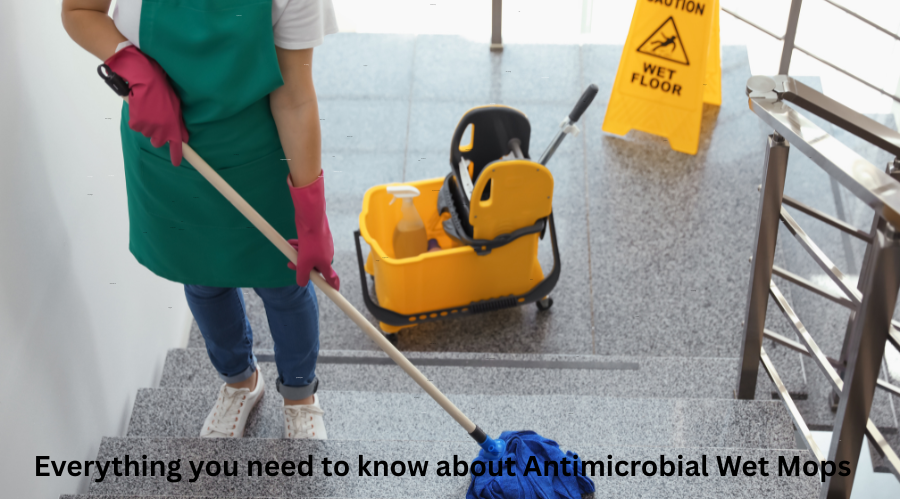
Antimicrobial mops contain substances to inhibit the development of bacteria and mold on the surface.
Common antimicrobial materials are silver ions, zinc-containing materials, and chlorine-resistant materials.
They can be used in hospitals, food processing plants, and commercial cleaning.
The choices in materials can be microfiber, cotton loop, or synthetic heads.
Antimicrobial mops play a critical role in facilities that demand strict hygiene. Using standard mops can spread or leave behind bacteria between uses. This risk increases in regulated settings such as healthcare and food service. This guide explains how antimicrobial mops work. This also covers material types, buying considerations, and maintenance activities for bulk buyers. These factors help facility managers select mops that last in real use.
A wet mop is infused with antimicrobial agents to work within the mop. These agents prevent bacteria, molds, and mildew from growing between cleanings. Antimicrobial mops are less prone to trapping moisture, which causes odor, than conventional mops. Facilities use them when the consequences of hygiene failures are serious. The antimicrobial treatment usually lasts for 75 to 150 wash cycles. This function helps limit cross-contamination during regular cleaning chores.
Antimicrobial agents prevent bacteria from growing or reproducing. The treated fibers give off silver ions that kill bacteria on contact. The zinc compounds also show similar effects by inhibiting bacterial and fungal growth. These agents are not affected by leaving the mop wet for hours. This continuous protection is what transforms antimicrobial mops from just cleaning products. Cleaning personnel do not need to take additional action for it to work.
Manufacturers use several effective antimicrobial compounds in mops. Treatment with silver ions is the most common treatment method. Zinc pyrithione is an excellent mold and mildew inhibitor.If cleaning with bleach, some manufacturers prefer using polymers that are not chlorine-sensitive. Different agent types affect durability, cost, and washing requirements.
Silver ion treatment directly bonds antimicrobial particles to mop fibers. This treatment will eliminate up to 99.9% of common strains of bacteria. Silver ions are not affected by many temperatures. Silver-treated mops are a frequent choice in hospitals and clinics for these merits.
Zinc-based compounds offer more specific fungal control than silver treatments. They perform well under humid conditions. This is one reason why zinc-treated mops are not preferred in food processing factories. Zinc treatment is also cheaper than other silver treatments.
Chlorine-resistant formulations will not be damaged by repeated exposure to disinfectants containing bleach. High chlorine levels can affect common methods for controlling microbial growth. This formulation is appropriate for facilities with strict bleach-based disinfection protocols. Some hospitals with high infection control standards may require this feature.
Various materials are available for mop heads, and each is treated differently. The fine fiber structure of Microfiber allows it to retain antimicrobial treatment easily. Cotton loop mops can take in more liquid but might need more frequent treatment refresh. Synthetic blends are used when cost and durability are important factors in large volume cleanings.
Microfiber mop heads trap more dust and dirt and reduce bacteria more than cotton mops do. Fine fiber structure evenly distributes antimicrobial treatment on the surface. Microfiber dries more quickly, which limits the time bacterial growth can occur. It is designed for use in systems that require regular, deep cleaning.
Use cotton loop mop heads for general areas with large spills. The mops are suitable for typical commercial cleaning applications. Cotton generally requires fewer wash cycles before it becomes antimicrobial. Buyers should confirm whether cotton is recommended for re-treatment.
Synthetic blend mop heads provide both absorbency and durability. It is lightly used from heavy daily use in a commercial environment. The combined materials can sustain antimicrobial effectiveness longer than cotton. This is perfect for buyers who require a medium performance but are not buying a lot of expensive items.
Several industries require antimicrobial mops for compliance and safety. They help meet sanitary regulations in food processing plants. Antimicrobial mops are used in schools and daycare to reduce the spread of sickness. They support general hygiene in hotels and commercial facilities. These mops are also used in gyms and fitness centers to control moisture and intensive use.
Active antimicrobial mops prevent bacterial growth during use. A regular mop only picks up visible dirt from the surface, but it doesn't always protect against it. Standard mops start to collect the bacteria responsible for odors sooner. Despite not being washed consistently, antimicrobial mops maintain things hygienically.The difference matters in high-risk or regulated environments.
Buyers should check antimicrobial claims against trusted testing standards. EPA registration is a process that assures safety and efficacy. The ISO 20743 testing determines the efficacy of antimicrobial treatment of textile products. AATCC 100 testing is another widely accepted standard for fabric antimicrobial performance. Check manufacturer test reports before purchasing in quantity.
The antimicrobial treatment becomes less effective as the number of washes increases. Most treatments last from 75 to 150 wash cycles. High grade silver-ion treatments can last to the high end of the spectrum. Wash counts and know when to replace the facilities. Hygiene protection is reduced when mops are used beyond effective treatment time.
Proper laundering will maintain the mop's antimicrobial effectiveness throughout its life.
Do not put the washing mops in water that is hotter than 160°F to avoid damage to the treated fibers.
Be careful not to use too much bleach, as this will reduce the efficacy of some antimicrobial coatings.
When possible, air dry or use only low-heat drying.
Using mops according to the manufacturer's instructions prolongs the useful life of the mop. Avoid fabric softeners when treating materials, as this coating may limit contact with antimicrobials.
The replacement schedule is based upon the level of risk and use at the facility. At expensive facilities, such as hospitals, mops are changed more frequently, typically after every 100 wash cycles. For commercial spaces that are not as hazardous, a replacement cycle of 150 cycles or more may be used. Replace whenever there is visible wear, fraying, or stink, no matter how many cycles have elapsed.Note the replacement date for compliance purposes at facilities. A basic log ensures that managers do not use mops beyond their useful life.
Match the mop material and treatment type to the facility's needs. Select silver ion treatment for critical care areas for the greatest level of germ protection. In facilities that need to deal with mold and humidity, use zinc-based treatment. Before ordering a bulk package, consider wash frequency, budget, and required certifications. Ask for samples to test in your facilities.
Antimicrobial mops give facilities real protection when hygiene errors have a profound impact. The right material, treatment choice and replacement schedule ensure consistent cleanliness standards. Buyers will want to reduce their risk before placing a bulk order by checking certifications and testing samples.
Who is a custom antimicrobial wet mop supplier offering competitive prices?
Some manufacturing companies will have discounted pricing structures for custom-sized mop heads and treatment types. Usually, the quantity you have to order to get the discount is the standard wholesale quantity.
Where can I find a wholesaler of antimicrobial mops with customization?
You can get custom sizing, color coding, and private labeling on trade platforms or directly from manufacturers. A buyer should always order samples before placing an order for a large custom job.
What certifications should I be considering if looking into an antimicrobial mop supplier?
Look for EPA Registration and ISO 20743 or AATCC 100 Test Reports. These certifications are for antimicrobial treatment, indicating safety and efficacy.
How do I know when to replace an antimicrobial wet mop?
Monitor wash cycles, inspect for color loss or odor, or check absorbency. The average mop life range is 75 to 150 cycles. High-risk facilities are encouraged to use mops with a shorter end of this range.
Highlights Reliable China cleaning produc
READ FULLHighlights Antimicrobial mops
READ FULLIt is much simpler to find a supplier for any product since B2B platforms have become popular. Th
READ FULL